Thursday, January 11, 2018

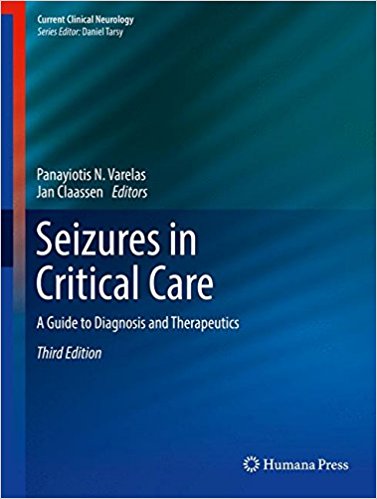
Seizures in Critical Care: A Guide to Diagnosis and Therapeutics

Updated and expanded to provide the neurologic, intensive and critical care communities a comprehensive guide to common critical care illnesses and seizures, this third edition remains the premier resource on seizures in critical care. In addition to covering etiology, pathophysiology, diagnosis, differential diagnosis and treatment options, chapters feature the latest technologies and treatments and integrate current literature. This unique and specialized text offers neurologists, intensivists, neurosurgeons, trauma surgeons, epileptologists, electrophysiologists and residents in various specialties clarity on this challenging set of comorbidities.
http://nimbleinity.com/6A5A 

Anesthesia in High-Risk Patients 2018

This book describes the approach to anesthetic and perioperative management in different categories of high-risk patient scheduled to undergo elective noncardiac surgery. Individual sections focus on patients with conditions entailing cardiac and hemodynamic risks, respiratory risks, renal and metabolic risks, neurological risks, and other forms of risk. For each condition, up-to-date guidance is provided on risk evaluation, risk stratification, and intraoperative and postoperative anesthetic management. This is the first time that such different clinical situations have been gathered together in a single textbook of anesthesiology. All of the authors are international experts with extensive clinical experience. The aim is to provide trainee anesthesiologists with clear guidance that will prove invaluable when managing a wide range of patients with serious illnesses or conditions that pose a significant anesthetic risk. The book will also serve as a valuable reference for more experienced anesthesiologists and intensivists.
http://nimbleinity.com/69C3

Sunday, December 24, 2017

Basic Sciences in Anesthesia 2018

This textbook presents the most recent evidenced-based knowledge in basic sciences in anesthesia. It covers topics from the syllabus of the American Board of Anesthesiology (ABA) basic science exam, including anatomy, pharmacology, physiology, physics in anesthesia, and more. In each chapter, key points summarize the content, followed by a pertinent and concise discussion of the topic, ending with multiple choice questions with answers and suggested further reading.

Basic Sciences in Anesthesia is aimed at residents taking the ABA basic science of anesthesia examination, and any other anesthesiologist or trainee with an interest in the topic.
http://yoitect.com/B1bZ

Sunday, November 26, 2017

CPR AED & First aid

Quick Reference to Critical Care Fourth Edition


The fourth edition of this pocket-sized reference guide to procedures, treatments, and stabilization techniques for disorders, injuries, and patient situations commonly seen in the critical care setting is now updated for use by nursing students as well practicing critical care nurses.  Featuring new  information on new drugs, defibrillators and EECP therapy, this useful reference offers two sections providing quick access to need-to-know information. The first section is organized by body system, with problems of each system alphabetized. The second section contains essential information on drugs, dosing, conversions, calculations, compatibilities, laboratory tests, and more.
This edition features over 200 images and tables, as well as Fast Facts and mnemonics to foster knowledge retention. Cross-references include page numbers, which provides quick access to information without the need to search the index.
http://yamechanic.com/BizU

Saturday, November 25, 2017

Hepatic and Biliary Diseases: Anesthesiologists' Perspective


Beginning with an introduction to the basic anatomy of the liver and biliary tract, this book discusses the peri-operative management of different disorders and conditions that may affect the liver and ultimately lead to hepatic failure, for example, alcoholic liver disease, hepatorenal syndrome, endocrine dysfunction and liver disease in pregnancy. Rare hepatobiliary diseases with significant morbidity are discussed, as are future prospects such as a liver support system with the potential to revolutionise the management of end stage liver disease.
http://yamechanic.com/ADzQ

Monday, November 20, 2017

Anesthesia and Neurotoxicity


This book, written by leading Japanese experts in the field, describes the latest findings on the neurotoxicity of anesthetics for the developing brain, postoperative delirium and cognitive dysfunction.
It describes the risk factors for postoperative cognitive dysfunction in elderly surgical patients. Since the number of elderly patients undergoing surgery and anesthesia continues to increase, it is important to improve our understanding of the risks and mechanisms of postoperative delirium and cognitive dysfunction, potential ways to prevent or alleviate them and the public health implications.
Recently, it has been shown that using anesthetics on the developing brain causes apoptotic neurodegeneration and persistent learning/memory deficits later in life. Anesthesiologists need more information on this mechanism in the human brain.
The negative effects of anesthesia and surgery on the nervous system have attracted attention lately; this book provides physicians, researchers, and postdocs with invaluable information on this topic.
http://yamechanic.com/1evO 

A Practical Approach to Pediatric Anesthesia


Part of the highly popular Practical Approach to Anesthesia series, this new edition combines the comprehensive depth of a textbook and the user-friendly features of a practical handbook. Focusing on clinical issues in pediatric anesthesia, it contains the in-depth information you need for daily practice and study, presented in a concise, bulleted format for quick reference. With its emphasis on developmental aspects of pediatric anesthesia, numerous illustrations and tables, and methodical approach to decision making, this updated reference is an invaluable resource for anyone involved with anesthesia of children.

Key Features
  • Features new chapters on vascular biology and vascular anomalies, healing and recovery in pediatric surgery, and training and education in pediatric anesthesia. All existing chapters have been fully updated to keep you up to date.
  • Covers key issues of growth and development – anatomic, physiologic, and pharmacologic – that form the basis for a better understanding of pediatric anesthesia.
  • Discusses the approach to the pediatric patient, clinical and operational aspects of pediatric anesthesia, anesthetic management of normalities and abnormalities of each organ system, and special situations such as fetal surgery, anesthesia outside the operating room, and trauma.
  • Provides a clear understanding of anomalies, embryology, anatomy, and surgery so that you’re well prepared to choose the best induction, maintenance, and emergence techniques, as well as make informed monitoring and equipment decisions.
  • Presents information in a bulleted, outline format for easy reference and review.
Now with the print edition, enjoy the bundled interactive eBook edition, which can be downloaded to your tablet and smartphone or accessed online and includes features like:
  • Complete content with enhanced navigation
  • Powerful search tools and smart navigation cross-links that pull results from content in the book, your notes, and even the web
  • Cross-linked pages, references, and more for easy navigation
  • Highlighting tool for easier reference of key content throughout the text
  • Ability to take and share notes with friends and colleagues
  • Quick reference tabbing to save your favorite content for future use
http://yamechanic.com/1eB2 

Yearbook of Anesthesiology-6


Yearbook of Anesthesiology-6 is an up-to-date guide to the latest advances in anaesthesiology practice. Comprising 24 chapters covering all three specialties associated with anaesthesiology - anaesthesia, pain and intensive care - this book presents the most recent information in the field, in a concise and highly illustrated format. The book covers the complete field from techniques and post surgical recovery, to pharmacology, non technical skills and medicolegal issues. Neurological complications and the management of patients with specific associated disorders (maxillofacial or brain trauma, anaphylaxis etc), are discussed in depth. A complete chapter is dedicated to biomarkers in anaesthesiology and the final section of the book - Journal Scan - presents commentary by experts on a selection of articles published in respected journals in the past year. Key Points * Presents latest advances in the field of anaesthesiology * In depth coverage of the three subspecialty areas within the field * Discusses all aspects from techniques and recovery, to pharmacology and medicolegal issues * Includes Journal Scan providing expert commentary on recent journal articles
http://yabuilder.com/BZIr 

Sunday, November 19, 2017

The Practice of Emergency and Critical Care Neurology


Fully updated and revised, the second edition of The Practice of Emergency and Critical Care Neurology puts a more modern approach on the practice of emergency neurological care. When most texts within the field focus on the theoretical aspects, this book concentrates on the management of neurologic conditions, recognition of deterioration of neurologic functions, neurosurgical procedures, and immediate interventions. This text also presents hard data to explain why we do what we do.

http://yabuilder.com/BYRG

Monday, October 30, 2017

International Trauma Life Support for Emergency Care Providers 8th

For more than 30 years, International Trauma Life Support has been at the forefront of trauma education at all levels of emergency care worldwide. This complete reference is filled with practical, hands-on training that guides readers through the hows and whys behind all of the skills necessary for rapid assessment, resuscitation, stabilization, and transportation of the trauma patient. Updated with the latest approaches to the care of the trauma patient, this Eighth Edition conforms to the most recent AHA/ILCOR guidelines for artificial ventilation and CPR. This new edition continues ITLS’s tradition of excellence to ensure learners get the most out of the few minutes they have to save their patients’ lives.
http://vializer.com/1WdR 

MKSAP 17 Medical Knowledge Self-Assessment Program

The 17th edition of Medical Knowledge Self-Assessment Program (MKSAP(R) 17) is specifically intended for physicians who provide personal, nonsurgical care to adults. Included are: general internists and primary care physicians; subspecialists who need to remain up-to-date in internal medicine; residents preparing for the Certification Exam in internal medicine; physicians preparing for the Maintenance of Certification Exam in internal medicine. The learning objectives of MKSAP(R) 17 are to:* Close gaps between actual care in your practice and preferred standards of care, based on best evidence.* Diagnose disease states that are less common and sometimes overlooked and confusing.* Improve management of comorbid conditions that can complicate patient care.* Determine when to refer patients for surgery or care by subspecialists.* Pass the ABIM Certification Examination and the ABIM Maintenance of Certification Examination.MKSAP(R) 17 Print includes 11 highly informative sections and a Cumulative Index. Part A sections publish on 31 July 2015 (Cardiovascular Medicine; Dermatology; Gastroenterology and Hepatology; Hematology and Oncology; Neurology; Rheumatology). Part B will publish on 31 December 2015 (Endocrinology and Metabolism; General Internal Medicine; Infectious Disease; Nephrology; Pulmonary and Critical Care Medicine). This option is ideal for those who like to work from a book but need them to be lightweight enough to be portable.
http://vializer.com/1VLY 

Sunday, October 29, 2017

ANAESTHESIA FOR THE ELDERLY PATIENT

Global ageing, in both developed and undeveloped countries, has made the need for high-quality knowledge and research on anaesthesia for the elderly increasingly important. The second edition of Anaesthesia for the Elderly Patient offers the anaesthetist guidance on the evaluation and management of elderly patients that present at hospital for surgery and anaesthesia. Containing 15 chapters on key topics such as emergency anaesthesia, orthopaedic surgery, and neurosurgery, as well as a new chapter on 'Anaesthesia for Non-Theatre Environments', this book ensures the reader is fully prepared for the clinical challenges they may face when working with this ever-growing vulnerable group.

Part of the Oxford Anaesthesia Library series, this second edition of Anaesthesia for the Elderly Patient offers a fully up-to-date comprehensive introduction to the major clinical issues facing anaesthetists working with elderly patients. All chapters are fully updated and content is presented in a concise and easy to read format, with helpful key points listed at the start of each chapter.
http://twineer.com/BGzP 

Emergency Medicine: Clinical Essentials


Emergency Medicine, 2nd Edition delivers all the relevant clinical core concepts you need for practice and certification, all in a comprehensive, easy-to-absorb, and highly visual format. This well-regarded emergency medicine reference offers fast-access diagnosis and treatment guidelines that quickly provide the pearls and secrets of your field, helping you optimize safety, efficiency, and quality in the ED as well as study for the boards.
Get clear, concise descriptions and evidence-based treatment guidelines for a full range of clinical conditions, ranging from the common to the unusual.Find the information you need quickly with a highly visual format that features hundreds of full-color clinical photographs, illustrations, algorithms, tables, and graphs, plus key information highlighted for fast reference.Consult high-yield text boxes in every chapter for Priority Actions, Facts and Formulas, Documentation, Patient Teaching Tips, Red Flags, and Tips and Tricks. Make the most of your limited time with easy-to-digest blocks of information, consistently presented for clear readability and quick reference.Study efficiently and effectively for the boards, or rapidly consult this title in daily practice, thanks to well-organized chapters, a superb use of images and diagrams, and clinically relevant, easy-to-understand content.Benefit from the knowledge and expertise of renowned educators, dedicated to compiling today's best knowledge in emergency medicine into one highly useful, readable text.
Be prepared to manage increasingly prevalent problems seen in the ED, such as emergent complications of fertility treatment and management of patients who have had bariatric surgery.Deliver high-quality care to your younger patients with expanded pediatrics content.Stay up to date with new chapters on Clotting Disorders and Hemophilia, Patient-Centered Care, Health Disparities and Diversity in Emergency Medicine, Cost-Effectiveness Analysis, Antibiotic Recommendations for Empirical Treatment of Selected Infectious Diseases, and Cardiac Emergency Ultrasound: Evaluation for Pericardial Effusion & Cardiac Activity.Access the complete contents of Emergency Medicine online, fully searchable, at www.expertconsult.com, with downloadable images, tables and boxes, and expanded chapters, plus videos demonstrating ultrasound-guided vascular access, sonography for trauma, and more.
http://twineer.com/BEDw 
Friday, October 20, 2017

Complications of Regional Anesthesia: Principles of Safe Practice in Local and Regional Anesthesia 3rd

Reflecting the rapid growth of pain medicine and of ultrasound as a tool, this Third Edition is more comprehensive and inclusive than previous editions and features additional pages, tables, diagrams, and color illustrations. In addition to the discipline of Anesthesiology, other specialists, who use local and regional anesthesia techniques, (surgeons, ophthalmologists, emergency medicine physicians and dentists), have also contributed to this edition of the book. Complications of Regional Anesthesia, with its newly added subtitle, Principles of Safe Practice in Local and Regional Anesthesia, stresses the relatively new emphasis and importance on safety and prevention and broadens the discussion to include the practice and administration of not just regional but also local anesthesia.
Each chapter has been thoroughly revised, brought up-to-date, and features full color images. Individual chapters cover complications associated with specific nerve blocks; IV and catheter methods; obstetric regional anesthesia; pediatric regional anesthesia; ophthalmic regional anesthesia; and treatment of acute and chronic pain.
http://skamason.com/7how 

Critical Care Update 2017

Tuesday, October 10, 2017

Manual of Neuroanesthesia: The Essentials

This book will provide all the basic details of neuroanaesthesia and how management of different neurosurgical cases may differ. Simple issues such as neurological examination of patient, understanding CT-scan and MRI scans along with anaesthetic management are discussed in simple language, making this book a ready-reckoner. The title provides an insight into all possible aspects of anesthetic management of neurosurgical and commonly encountered neurologic patients. The book also includes chapters related to allied specialities such as critical care, neurology and neuroradiology, making it a complete package.
http://yobuilder.com/3MNT 

Perioperative Temperature Management

This practical text offers a comprehensive guide to perioperative temperature management for anaesthetists, surgeons and nurses. The physiological basics of thermoregulation and heat exchange are covered, before the changes that occur during general and regional anaesthesia are outlined. The relevant adverse scenarios associated with perioperative hypothermia, including morbid cardiac events, impairment of coagulation, increased blood loss and surgical site infections are discussed, before the methods of measuring core temperature and the equipment and techniques to keep patients warm are described. Richly illustrated and clearly structured for quick reference, Perioperative Temperature Management is an essential daily resource to help ensure safe, effective practice.
http://yobuilder.com/3LsO

Procedural Sedation for Infants, Children, and Adolescents

Obtain the latest guidelines on safe and effective sedation for infants, children, and adolescents. Invasive and noninvasive procedures are a common and necessary component in the management of infants, children, and adolescents with acute and chronic diseases. As technology continues to expand, there are an increasing number of techniques that require sedation outside of the operating room.
Authored by experts in a variety of specialties, Procedural Sedation for Infants, Children, and Adolescents is a comprehensive guide for the initial design and implementation of a procedural sedation program and a tool to educate pediatric health care professionals on medications used for sedation, associated adverse events, and treatment of these adverse events.
Contents include:
    Pre-sedation evaluation
    Documentation and parental instructions
    Monitoring for procedural sedation
    Medications
    Specific clinical scenarios
    Non-pharmacologic interventions
    Topical and local anesthetic agents
    Quality improvement and assurance
    and more!
http://yobuilder.com/3LKH

Thursday, October 5, 2017

Drugs in anaesthesia and intensive care 5th

An essential reference text, the fifth edition of this popular book details drugs in anaesthesia and intensive care in an A-Z format. The book describes the pharmacokinetics and pharmacodynamics of all the drugs commonly used by anaesthetists. The A-Z organisation allows rapid access to specific information on the properties and characteristics of almost 200 drugs.

The new edition includes a complete revision of all the featured drugs, and the addition of key new drugs. New diagrams of particular drug structures and comparison tables aid comparison of differences within a drug class for exam revision. Improved navigation in the index enables prompt discoverability of information.

Written in a concise, bullet-point style to allow quick access to information, the book contains all necessary drug references for anaesthetists in training, consultant anaesthetists, intensive care nurses, and anaesthetic assistants.
http://quamiller.com/6xZP