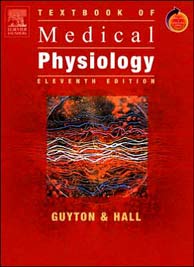
Textbook Of Medical Physiology
 Physiology’s classic text continues to uphold its rich tradition—presenting key physiology concepts in a remarkably clear and engaging manner. Guyton & Hall’s Textbook of Medical Physiology covers all of the major systems in the human body, while emphasizing system interaction, homeostasis, and pathophysiology. This very readable, easy-to-follow, and thoroughly updated, 11th Edition features short chapters, clinical vignettes, and shaded summary tables that allow for easy comprehension of the material.Book details:Arthur C. Guyton / John E. Hall,Publisher:Saunders/Elsevier Pages: 1152Size:15,8 MBFormat: CHM & PDFDownload(pdf version)CHM VersionDownload Part 1Download Part 2
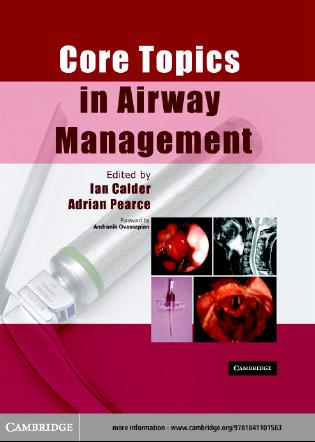
 This book provides an easy-to-read introduction to this important topic that will be of value to a wide spectrum of healthcare professionals including anaesthetists, intensivists, ODPs, theatre and recovery nurses. Concise but comprehensive chapters from experts in the field cover everything from basic anatomy, physiology and applied physics, through the various methods of maintaining the airway under anaesthesia (supraglottic devices, tracheal intubation, tubes/cuffs, endobronchial and double-lumen tubes) to the problem airway (obstruction by infection, tumour or a foreign body, ENT and maxillo-facial surgery, aspiration, obstetrics, trauma, cervical spine disease, intensive care, the 'lost' airway, extubation and recovery), the paediatric airway, disinfection and cleaning of equipment and finally morbidity, mortality and medico-legal issues. 'Real' clinical scenarios, with patient management questions and model answers, are included throughout, to bring to life some of the key problems encountered in day-to-day practice and enhance the book's utility as a teaching and self-learning tool.Book details:Author:Ian Calder (Editor), Adrian Pearce (Editor)Publisher: Cambridge University PressPages:226Size:14,00 MBFormat:PDFDownload
password:DrWael
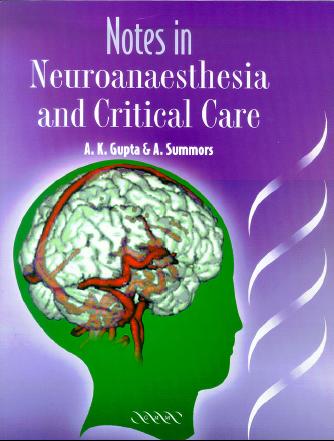
 This book provides an easy-to-read introduction to the many topics in neuroanaesthesia for postgraduate trainees undertaking a neuro-module as part of their training. It is designed to be comprehensive but concise and as such will be an ideal complement to the Textbook of Neuroanaesthesia and Critical Care as well as a useful 'aide memoire' for examination candidates. It will also serve as a useful quick reference for other ICU staff such as critical care nurses or ODAs.Aldenbrooke's Hospital, Cambridge, UK. An introduction to neuroanesthesia for postgraduate trainees, in a wide variety of fields. Also serves as a quick reference and memory aid for ICU staff members, examination candidates, and accident and emergency physicians. Includes sections on neurointensive care, monitoring, and pharmacology.Book details:Author: James H. BrownPublisher: Greenwich Medical Media Pages:256Size:2,3 MBFormat:PDFDownload
password:DrWaelRelated Books:Critical Care in Neurology and Neurosurgery
Vital Signs and Resuscitation Vital signs are an essential part of the physical examination of almost every
patient (some crusty practitioners would say every patient). An important responsibility of the health professional is to take them accurately. A second, and
frequently neglected, one is to promptly notify someone when an abnormality
exists, such as the elderly male who presents with severe chest and back pain
and high systolic and diastolic pressures (possibly having an aortic dissection),
or the elderly person presenting with abdominal pain and hypotension (possibly
having a ruptured abdominal aortic aneurysm).
This book is written for anyone taking vital signs: doctor, resident, intern,
medical student, nurse, practical nurse, nursing assistant, home health practitioner, emergency medical technician (EMT), as well as medical office and nursing home personnel, the fire fighter and in some cases the dental and x-ray technician.Book details:Author:Joseph V. StewartPublisher:Landes Bioscience; Spiral edition (June 2003)Pages:177Size:3,80MBFormat:PDFDownloadmirror
 Analgesia is now recognized as a significant contributor toclinical outcomes The goal for pain management is to providethe best analgesia with the least amount of side effects. Epidural analgesia is a desirable method of pain relief because it provides truesegmental analgesia with little or no contribution from systemic levels of opioids All of which may lead to excellentanalgesia with minimal side effects .Caring for patients who receive epidural analgesia requires specialized knowledge regarding the placement of the epidural catheter, management of the therapy, and monitoring for potential side effects/complications ,This self-directed learning
module is essential information for the nurse clinician who cares
for patients receiving epidural analgesia.Book details:Author:Susan L. Schroeder, RN, MS ,Clinical Nurse SpecialistPublisher:Department of Nursing Resources and DevelopmentPages:41Size:633 KBFormat:PDFDownload
password:DrWael